

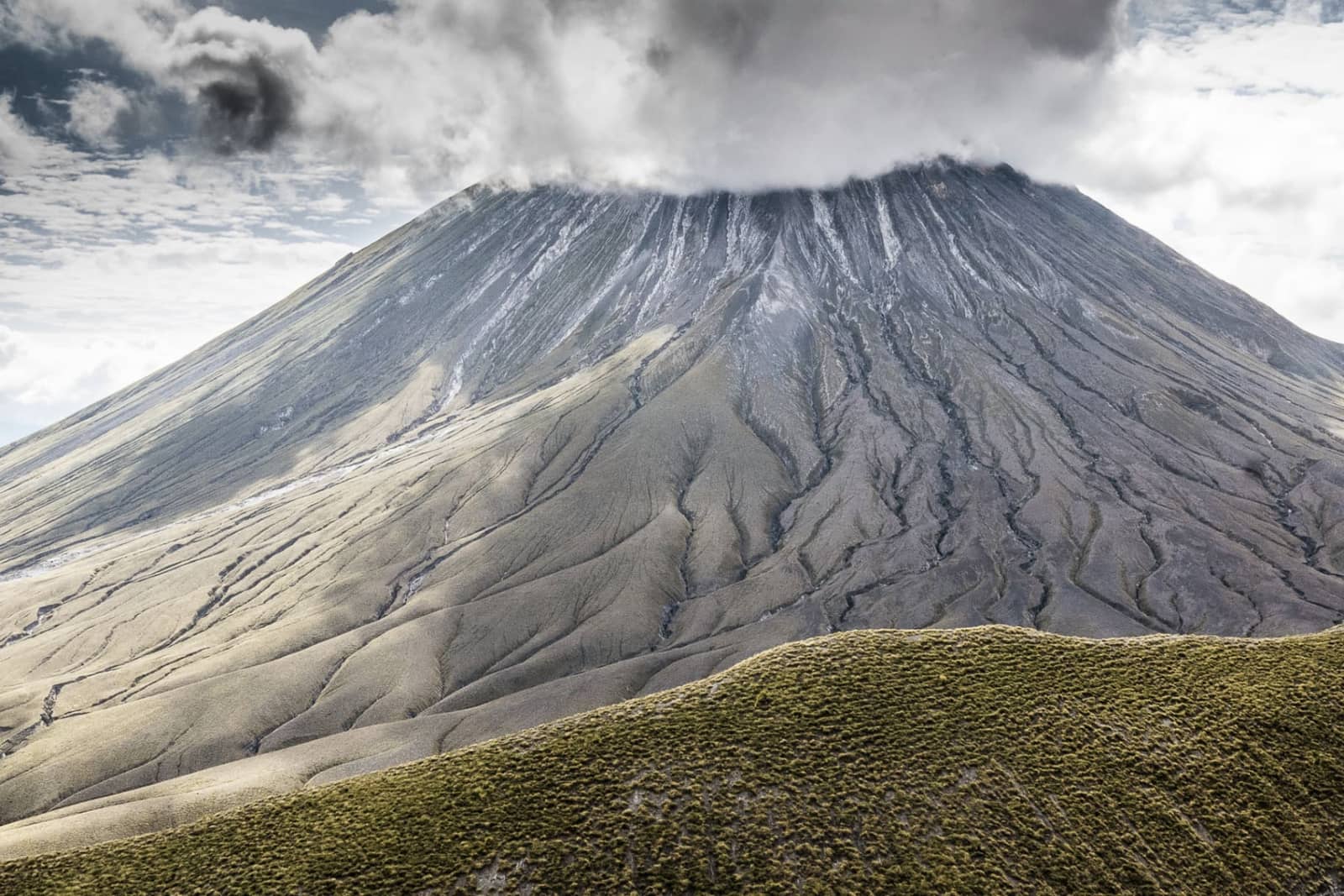
Ol Doinyo Lengai rising above Lake Natron in the Rift Valley

Ol Doinyo Lengai · 2,962 m

Ol Doinyo Lengai

Perched above the shimmering soda flats of northern Tanzania, Ol Doinyo Lengai, the Mountain of God in Maasai, is one of East Africa's most magical trekking adventures. This active volcano, rising to around 2,962 metres, offers more than the thrill of climbing. It is a journey through fiery landscapes, sacred culture, and surreal scenery that few places on earth rival.

Overview

The Mountain of God, above the flamingo shore

Perched above the shimmering soda flats of northern Tanzania, Ol Doinyo Lengai, the Mountain of God in Maasai, is one of East Africa's most magical trekking adventures. This active volcano, rising to around 2,962 metres (9,700 to 10,000 ft), offers more than just the thrill of climbing. It is a journey through fiery landscapes, sacred culture, and surreal scenery that few places on earth rival.

Our three day adventure combines an unhurried arrival at Lake Natron, a full cultural and exploration day among the Maasai and the flamingo shores, and a midnight ascent of the volcano itself. You reach the crater rim at sunrise, look down into steaming vents of natrocarbonatite lava, and see the Rift Valley open up 2,000 metres below.

The mountain

Details of Ol Doinyo Lengai

Unique volcano and lava

Ol Doinyo Lengai is the only volcano in the world that erupts carbonatite lava, a rare, highly fluid lava that behaves differently from ordinary basaltic or andesitic lava. Rather than flowing at extremely hot temperatures as most lavas do, its lava is much cooler in comparison, and after cooling it often weathers to lighter ash and whitish powders.

The result is a summit crater unlike any other in Africa. Steaming vents, black lava tongues that turn pale grey and then chalky white within days, and small hornito chimneys that grow and collapse between visits. Geologists come here from around the world precisely because there is nowhere else on earth quite like it.

Sacred to the Maasai

For the Maasai people, Lengai is more than a mountain, it is holy ground. Ceremonial rituals are performed here, and the volcano features in local folklore as the dwelling of Engai, their god. Climbing it is not just a physical challenge but also a cultural journey.

Every one of our departures spends time in the villages at the foot of the mountain, meets the Maasai families who graze their cattle within sight of the summit, and receives a briefing from a local guide who was raised here. You leave with a sense of the mountain that no summit photo can capture.

Surreal surroundings

The volcano overlooks Lake Natron, a soda lake unlike any other, intensely alkaline saline, its surface sometimes turns red with algae, its mud flats baked in the sun. This harsh environment is toxic to many species but suits others perfectly.

Lesser flamingos flock here by the thousands or even millions to feed, breed, and nest. The contrast of acidic lake, barren volcano slopes, and pink birds against the blue sky is breathtaking, one of the most photographed landscapes in East Africa, and rarely visited by classic safari circuits.

Adventure and views

A climb of Ol Doinyo Lengai takes you through dry, volcanic terrain, under the stars, to a sunrise at the crater rim. From the summit, views stretch over the Rift Valley, the steaming vents of the crater, Lake Natron's shimmering flats, and toward the distant peaks of the Rift escarpments.

The ascent is around seven kilometres of relentless loose scree with roughly 1,700 metres of vertical gain from base to summit. There is no technical climbing, no ropes and no ice, but the gradient is unbroken and the ground moves under your feet. It is a serious night out, and one of the most rewarding sunrises in Africa.

Location and how to get there

Ol Doinyo Lengai sits in the Ngorongoro Division of northern Tanzania, near the southern tip of Lake Natron and about 240 kilometres north of Arusha. The drive takes six to seven hours in a 4x4 safari vehicle, dropping off the Rift escarpment through Maasai grazing country and dust roads that get slower after rain.

The nearest airstrips are Lake Natron and Kleins Camp for guests combining the climb with a Northern Circuit safari. Most of our climbers travel overland from Arusha and pair the trip with either a Serengeti and Ngorongoro safari, a Kilimanjaro climb, or a Zanzibar beach extension.

Best time to trek Lengai

June to February is the recommended window. The mountain is dry, the scree is grippy, and the drive down the Rift escarpment is straightforward. December and January are warmest, with clear night skies and pin sharp views from the crater rim at dawn.

March to May are the long rains. The scree turns to sliding mud, the escarpment road becomes very difficult, and we do not run departures. Late November can be affected by short rains but climbs still go out when the weather is stable.

Why climb

Why people trek Ol Doinyo Lengai

  • 1

    The only carbonatite volcano on earth

    A summit that geologists travel across the world to see, with cool flowing black lava that weathers to pale grey and white within days.

  • 2

    Sunrise on the Rift Valley

    Reach the crater rim as the sun clears the horizon, Lake Natron catching pink light 2,000 metres below and the flamingo flats stretching to the base of the escarpment.

  • 3

    Maasai country, not tourist country

    You climb from a Maasai village and sleep on the shore of a lake that few classic safari guests ever reach. The whole experience is quieter, wilder, and more cultural than the main circuit.

  • 4

    Pairs perfectly with a longer trip

    A three day Lengai adventure slots naturally onto a Northern Circuit safari, before a Kilimanjaro climb, or as a wild counterpoint to a Zanzibar beach stay.

What to expect

From Arusha to the crater rim, hour by hour

Day 1: Arusha to Lake Natron

Morning departure, six to seven hour drive north past Mount Meru and off the Rift escarpment into Maasai grazing country. Arrive Engare Sero village on the lake shore in the late afternoon, sunset walk to the water's edge, dinner at your tented camp.

Day 2 morning: Waterfalls, flamingos and a boma

A guided walk with a Maasai guide to the Engare Sero waterfalls for a swim, an afternoon visit to a nearby boma and to the flamingo flats. Early dinner and a short rest before the midnight climb.

Day 2 midnight: The ascent by headtorch

Collected at around 23:30 for the short drive to the base of the volcano. Steep, unbroken scree, no technical climbing, roughly six to eight hours to the crater rim by headtorch. Timed to reach the top for sunrise.

Day 2 sunrise and day 3: The descent and drive back

Time on the crater rim looking down at the active vents and out across Lake Natron. Long, careful descent on loose scree, back at camp by mid morning for breakfast and rest. Drive back up the escarpment to Arusha on day three.

Health and safety

A serious summit, done carefully

Ol Doinyo Lengai is not a high altitude climb in the Kilimanjaro sense, the summit sits below 3,000 metres, so acute mountain sickness is rare. The real physical challenge is the gradient and the loose scree, combined with a midnight start after a hot day at the lake. Our departures are built around a slow, deliberate pace, careful hydration, and honest calls when the weather turns.

You will not be pushed. If your guide decides the mountain is unsafe or that you should turn back, you turn back. That call has kept every one of our climbers safe on this volcano.

  • Every climb goes out with a professional English speaking guide who has summited the mountain many times.
  • Group size capped at eight climbers per guide so the pace stays honest for the slowest walker.
  • Bottled and filtered drinking water carried on the ascent, plus electrolyte tablets on request.
  • Comprehensive first aid kit carried on every climb.
  • Weather calls are the guide's, if the mountain is unsafe we turn back or postpone the summit push.
  • Comprehensive travel insurance including emergency evacuation is required for every climber.
Best time

Best time to trek Ol Doinyo Lengai

June to February is the recommended window. The mountain is dry, the scree is grippy, and the drive down the Rift escarpment is straightforward. December and January are warmest, with clear night skies and pin sharp views from the crater rim at dawn.

March to May are the long rains. The scree turns to sliding mud, the escarpment road becomes very difficult, and we do not run departures. Late November can be affected by short rains but climbs still go out when the weather is stable.

Why Western Bridge Africa

A local operator, a Maasai guiding team

  • Owned and operated in Arusha with a permanent Maasai guiding team at Lake Natron.
  • Fair wages for local guides and camp staff on every departure.
  • Small group sizes, private departures on request, no shared vehicles with strangers.
  • Honest year round pricing, no peak season surprises.
  • 24/7 in country support throughout your trip.
Begin your journey

Tell us your dream of Africa.
We will compose the rest.

Every itinerary is built one conversation at a time. Share your dates, your travellers, and the wildlife or summit you'd most like to meet - a specialist replies within 24 hours.

Loading Western Bridge Africa

Western Bridge Africa

Tanzania · Est. Arusha